
Image analysis with Fiji/ImageJ
A live online course in five sessions. You’ll learn to segment, count and measure objects in 2D and 3D, use deep-learning tools, and automate your analysis with macros. No prior experience needed.
Course details
- Format
- Five live sessions of 2.5 hours on Microsoft Teams
- Times
- 9:30–12:00 or 13:30–16:00 UK time, depending on the session
- Group size
- Up to 25 participants
- Price
- £125 per person
- Level
- Beginners welcome, and useful for experienced ImageJ users too
- Software
- Fiji/ImageJ
Upcoming dates
The next public courses will run in late 2026 and early 2027, with places for 25 people in each.
Bookings are taken on Eventbrite. Follow Pixel Biology there and you’ll get an email as soon as new dates are published.
Training a whole group? A private workshop can be adapted to your team’s projects.
What happens each day
Monday to Wednesday each open with a lecture of about an hour, followed by hands-on exercises with the instructor on hand to help.
- Monday
Introduction to bioimage analysis
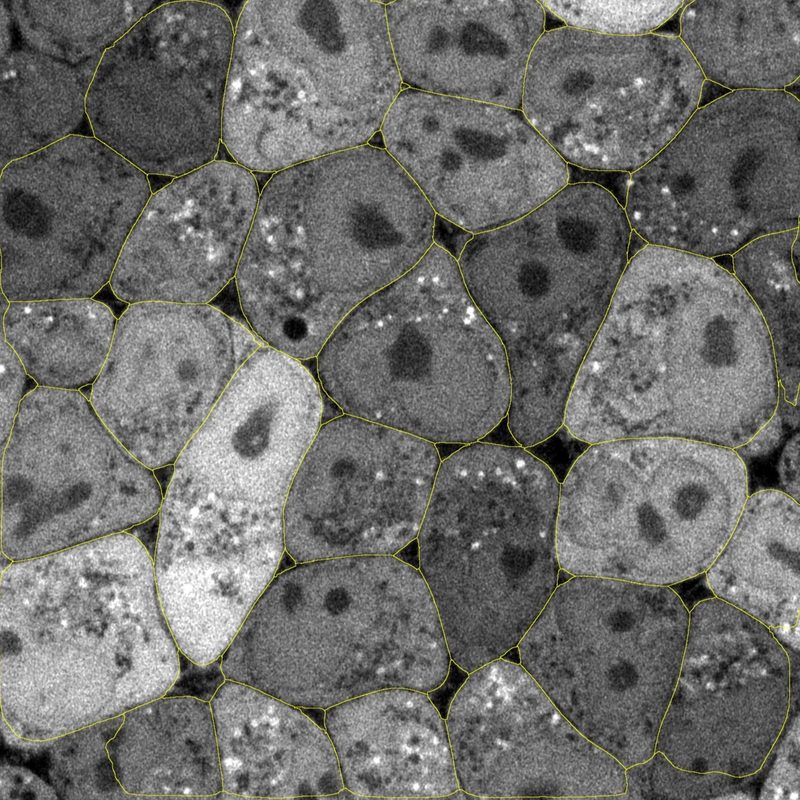
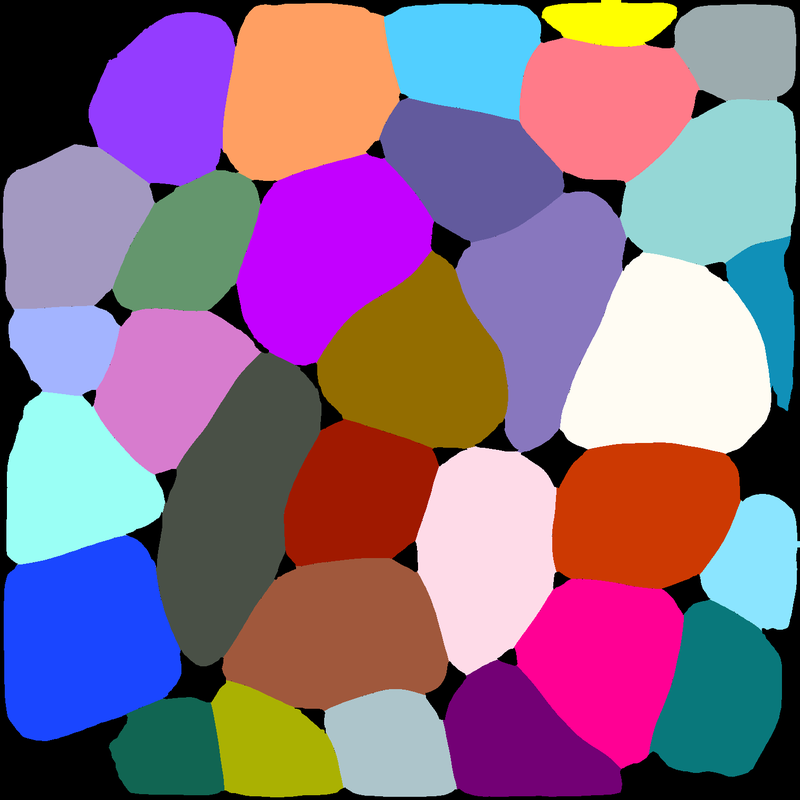
Segment and count objects automatically in 2D and 3D, and visualise complex biological structures.
- Tuesday
Filters, masks and colocalisation
Improve segmentations with filters and masks, and compare different kinds of colocalisation analysis.
- Wednesday
AI, registration and tracking
Use artificial intelligence for segmentation and denoising, align images with registration, and track particles over time.
- Thursday
One-to-one chats
Private time with the instructor to talk through your own images and questions. You can also make a start on Friday’s exercises.
- Friday
Automation and good practice
Write macros that batch-process large datasets, in a session that is in part pre-recorded, and learn the good and bad practices of image analysis.
By the end, you’ll be able to
- Segment and count cells, nuclei or other objects in 2D and 3D
- Clean up segmentations with filters and masks
- Choose and run a suitable colocalisation analysis
- Denoise and segment images with deep-learning tools
- Register images and track moving particles
- Write a macro that processes a whole folder of images
- Recognise the practices that make image data unreliable
Who it’s for
Postgraduate students and early-career researchers get the most from it, but it suits anyone who needs numbers from images. Examples use fluorescence micrographs of biological samples; the principles apply across disciplines.
What you need
A computer, a stable internet connection and uninterrupted time. A microphone helps, and a second monitor makes the exercises easier to follow. Depending on your experience, you may want extra time to finish the exercises.
“I thought the course was very well explained and I found everything easy to understand. I hadn’t had any previous experience with image analysis before this course so thank you Lior!”
“Everything I envision using ImageJ for was covered by the course, it was very good.”
Questions
Do I need any experience with image analysis?
No. The course starts from the basics, and participants with years of ImageJ experience have still found it useful.
Are the sessions live?
Yes. Sessions run live on Microsoft Teams, apart from Friday’s macro session, which is in part pre-recorded.
How do I book?
Booking is through Eventbrite. Follow Pixel Biology there to hear when new dates open.
Can you run the course for my group?
Yes. Private workshops run on-site or online and are adapted to your team’s projects.
Anything else? Ask us.